

Thomas Rumble // Shutterstock
How community-focused homebuilding is preserving character amid rapid growth
Housing shortages have forced American developers to prioritize volume over design. The U.S. currently faces a deficit of approximately 1.2 million housing units compared to pre-2008 levels, pushing builders toward standardized, cost-efficient models that maximize density.
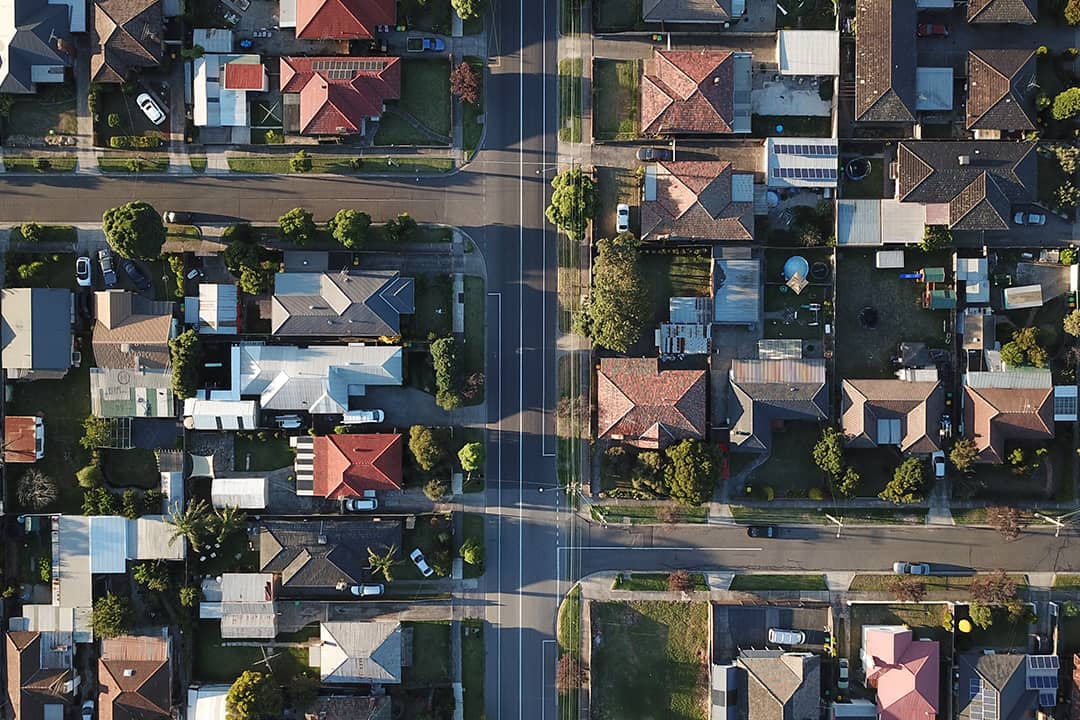
Yet this volume-first approach creates a secondary problem: Neighborhoods increasingly lack character, walkability, and community infrastructure. Triple Crown Homes explored how a growing number of developers are testing community-focused homebuilding that balances affordability with local identity and livability.
Triple Crown Homes
What is Community-Focused Homebuilding?
Community-focused homebuilding is an architectural and urban planning approach that prioritizes public spaces, local architectural history, custom designs, and multigenerational layouts over maximizing the number of identical houses on a grid.
There are builders implementing this approach, from building for volume to creating for the well-being of the locals and the environment.
They work by building for a specific community, such as retirees, active adults, or growing families. Buyers also have a say in the design, as they can customize certain aspects to make the home feel more like their own and differentiated from standard designs.
Beautiful houses, however, are not enough to make a community. Third spaces (parks, gardens, trails, bike lanes, coffee shops, etc.) allow locals to meet and interact freely.
The Benefits of Community-Focused Development
Standard tract housing appears efficient theoretically because it’s a system optimized for developer profit margins and rapid assembly. However, efficiency comes at a cost: Neighborhoods can end up feeling interchangeable, with little flexibility and even less connection to the landscape that made the area appealing in the first place.
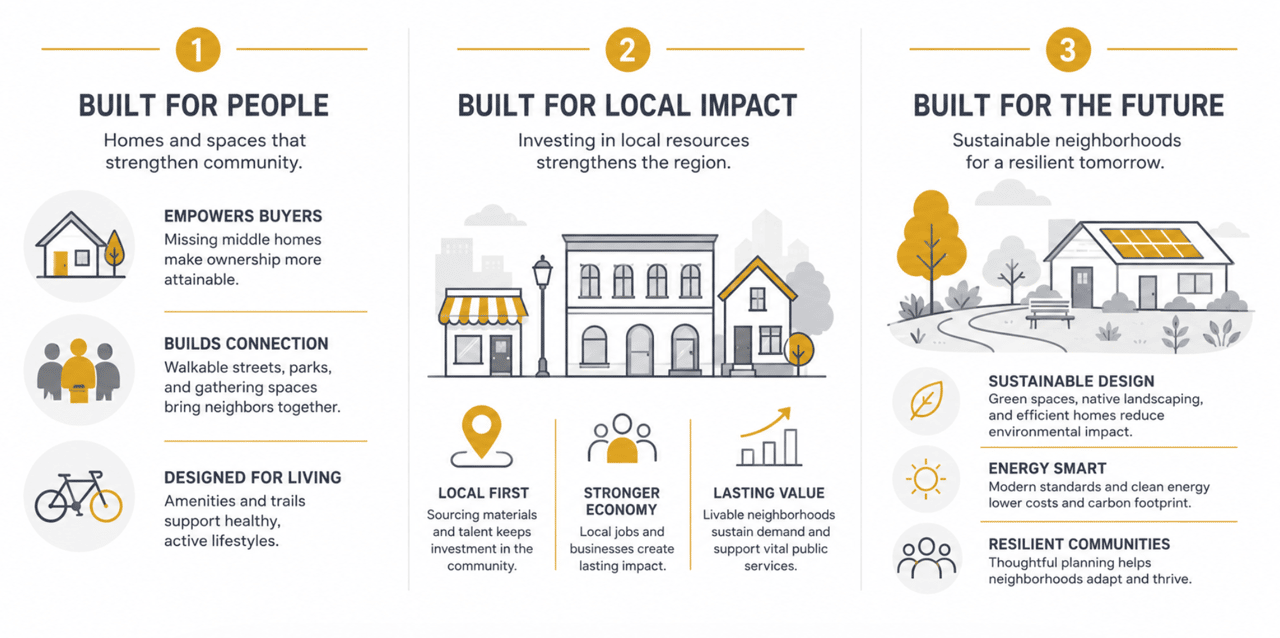
Empowers First-Time Buyers
Community-focused builders are rethinking the familiar formula of ever-larger detached houses. Instead, they’re embracing the “missing middle”: pocket-neighborhood cottages, townhomes, duplexes, and courtyard homes that fit comfortably between a suburban mansion and a high-rise apartment.
By making smarter use of land, these homes often come with a lower price tag, offering first-time buyers an entry in the housing market. Homeowners trade a sprawling backyard for a smaller private footprint, but they gain access to shared parks, walking trails, and neighborhood gathering spots.
Boosts the Local Region
Community-focused developments prioritize local sourcing. Rather than depending exclusively on sprawling national supply chains, these developments choose to source materials from nearby quarries and lumber mills, hire local tradespeople, and bring regional artisans into the mix. As a result, more of a project’s investment circulates within the local economy rather than leaving it.
These neighborhoods are also designed around resident lifestyles (walkable streets, nearby amenities, and shared gathering spaces).
That emphasis on livability helps sustain demand even when the broader economy stumbles, providing local governments with a steadier tax base to support public schools, emergency services, parks, and other community amenities.
Homes Built for Sustainability
This building philosophy favors green spaces, pocket parks, and native landscaping over massive high-maintenance lawns. Also, because these homes are clustered efficiently and built to modern energy standards, they feature lower heating, cooling, and utility overheads.
An example of a sustainable community-focused city comes from America’s first solar-powered town, Babcock Ranch. Powered by a nearby utility-scale solar array, the community pairs clean energy with practical design choices, from native landscaping and bioswales to strict energy-efficiency standards.
The result is a town built not just to run on renewable energy, but to handle Florida’s increasingly intense weather while keeping its environmental footprint in check.
At the center of the city, a communal hub integrates retail, civic meeting spaces, open-air coworking areas, and recreational trails in a single, connected environment. This design prioritizes walkability and reduces resident car dependency, which lowers both transportation costs and carbon emissions for the community.
The Future of American Neighborhoods
There is a need for new homes, but that doesn’t mean every new neighborhood has to look like it was built to standardized designs.
Community-focused design shows there’s a middle path, one where affordability doesn’t come at the expense of character, environmental responsibility isn’t an afterthought, and local history isn’t paved over in the name of speed.
Done well, growth gives residents more options instead of taking them away through the removal of green spaces.
This story was produced by Triple Crown Homes and reviewed and distributed by Stacker.

