
New Africa // Shutterstock
Why 62% of Americans lower their eco-values on vacation
Most Americans like to think of themselves as the kinds of people who carry a reusable bottle and skip the plastic straw without thinking about it. For a lot of them, that’s even true most days.
Then comes the airport. With Memorial Day weekend marking the unofficial start of the summer travel season, tens of millions of Americans are about to test how portable their values really are over the months ahead.
According to a 2026 SmartLifeCo survey of 1,000 U.S. adults, 62% of American travelers openly admit they hold themselves to a lower environmental standard on vacation than at home. It’s a conscious, almost cheerful suspension of the rules, and the people most likely to do it are often the same ones who care most about the planet the rest of the year.
Public concern about plastic waste and tourism’s environmental footprint has never been higher. Travelers say they want hotels to do better, support bans on single-use plastics, and feel genuinely guilty when they get home. But somewhere between the TSA and the hotel lobby, the values quietly check out.
Key Findings
- 62% of respondents say they hold themselves to a lower environmental standard on vacation than at home.
- 24.7% buy a single-use plastic water bottle every day of a trip, even where tap water is safe.
- 46.7% estimate they generate 25%-50% more single-use plastic on vacation than at home.
- 43.1% of Gen Z travelers say their sustainable habits slip within 48 hours of check-in.
- 86% agree hotels and travel companies should do more to help travelers make sustainable choices.
- 55.5% support charging extra for single-use items at hotels and airports.
- 33% say they feel relieved to return home to their greener routines.
Travelers Know There’s a Gap, But They’ve Made Peace With It
For years, the travel industry has built marketing campaigns around a clear consumer signal: Travelers say they want sustainability. A 2025 Booking.com report put that number above 80%, with 93% saying they want to make more sustainable travel choices.
SmartLifeCo
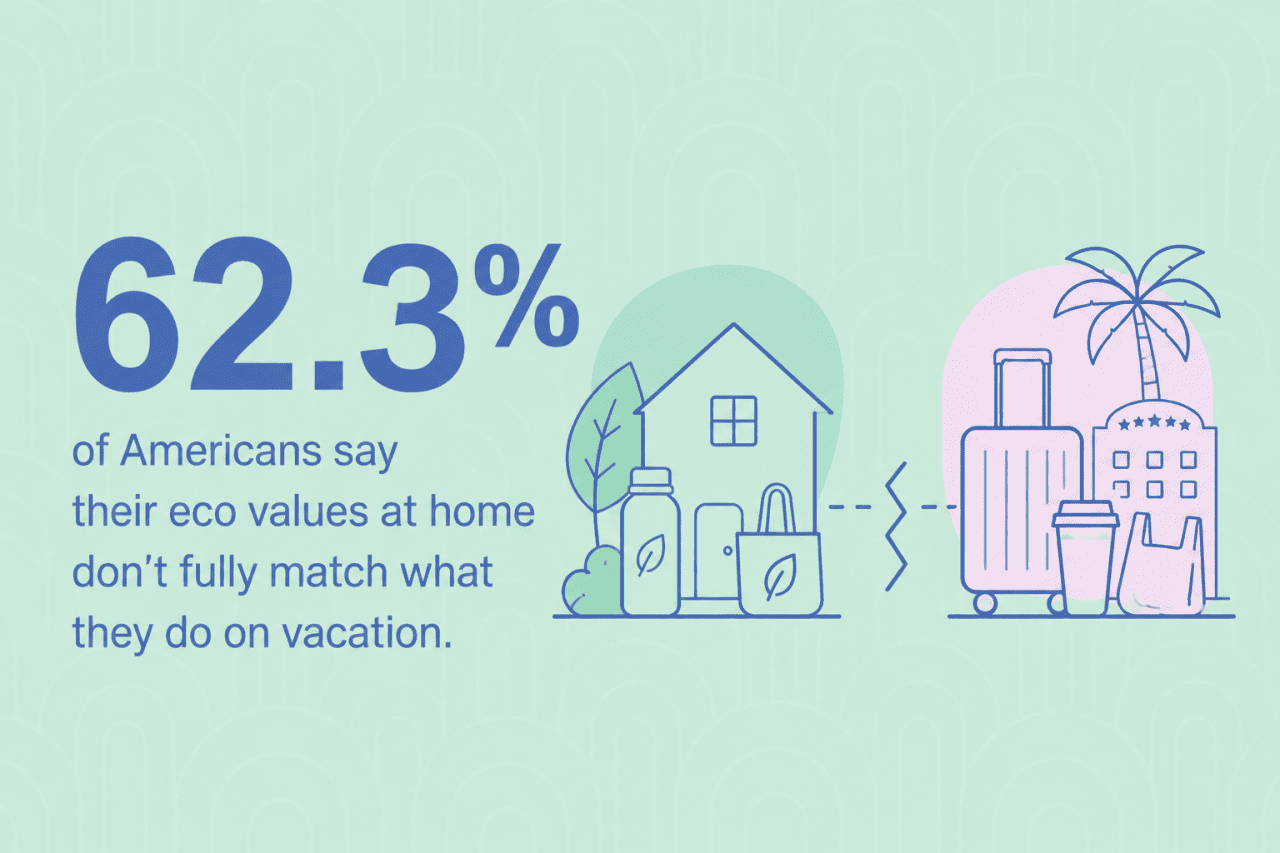
The SmartLifeCo survey doesn’t contradict that, but it does add a wrinkle. More than 3 in 5 (62.3%) respondents acknowledge there’s a real gap between their eco values at home and what they actually do on vacation. Just 14.5% call that gap “uncomfortable.” The rest have made their peace.
A finding buried near the end of the survey may be the most sophisticated of the bunch: 14.8% of respondents say personal guilt doesn’t fix systemic problems. It’s a small number, but it captures the argument the entire dataset is making. Travelers know what they’re doing. They feel a little bad about it. They’ve concluded that math doesn’t work without help from somewhere else.
The Education Paradox: The More You Know, the Worse You Behave
SmartLifeCo
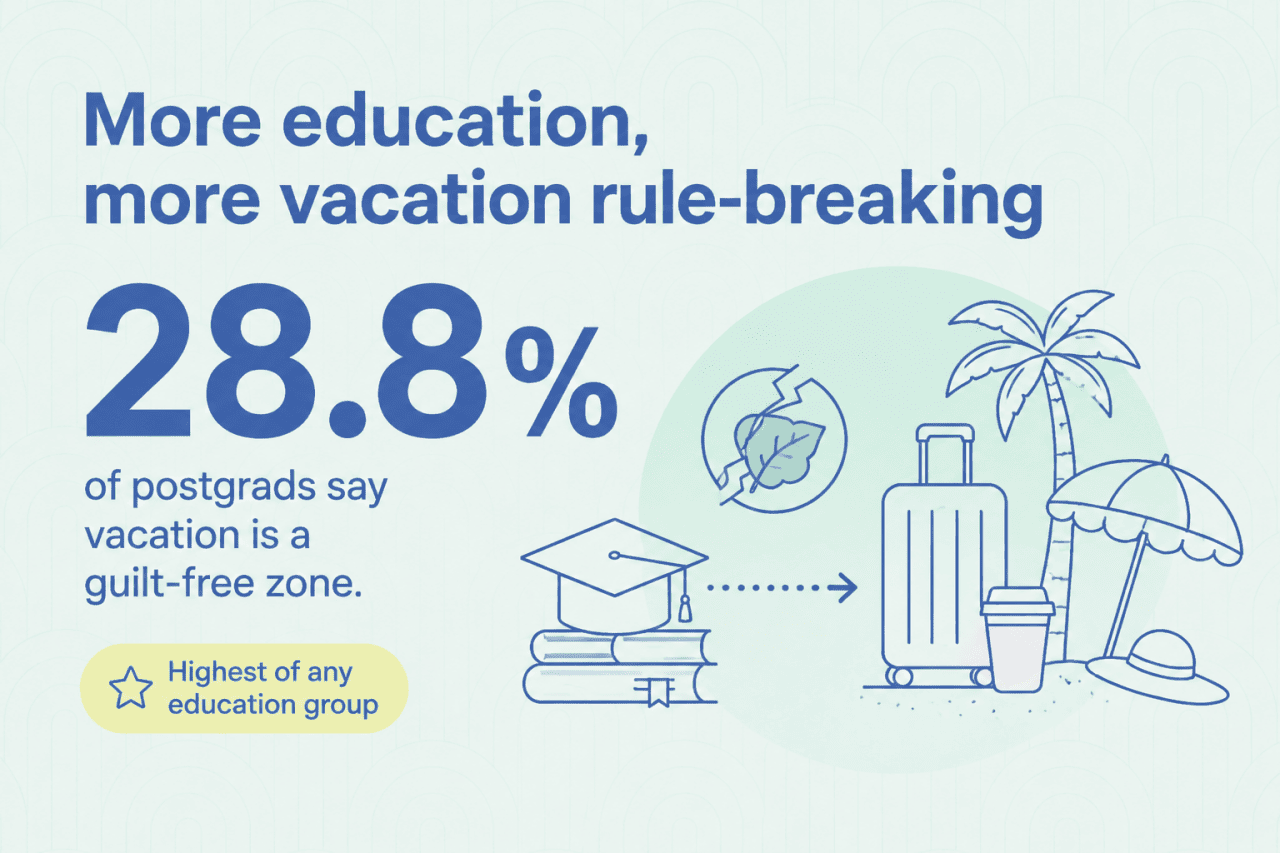
One of the most counterintuitive patterns in the data is this: The more educated the traveler, the more likely they are to break their own eco-rules on vacation. Fewer than 3 in 10 (28.8%) postgraduate respondents strongly agree that vacation is a guilt-free zone, the highest of any education group. About 1 in 5 (19%) postgrads say they generate dramatically more plastic on vacation than at home, also the highest. And 49.5% of postgrads, along with 49.2% of bachelor’s degree holders, say the system is to blame for their behavior.
Higher-income, higher-education travelers tend to travel more often, stay longer, fly internationally, and spend more on the kind of convenience services that come wrapped in plastic. Millennials, who lead on both top single-use offenses (56.1% on plastic bottles, 48.8% on toiletries), are also in their peak hotel-stay years and the most likely to be traveling with young kids. The travelers with the most awareness also have the most exposure, the most rationalization frameworks, and the most disposable income to spend their way out of inconvenience.
Nearly 1 in 4 Travelers Buys a Plastic Bottle Every Day on Vacation
SmartLifeCo
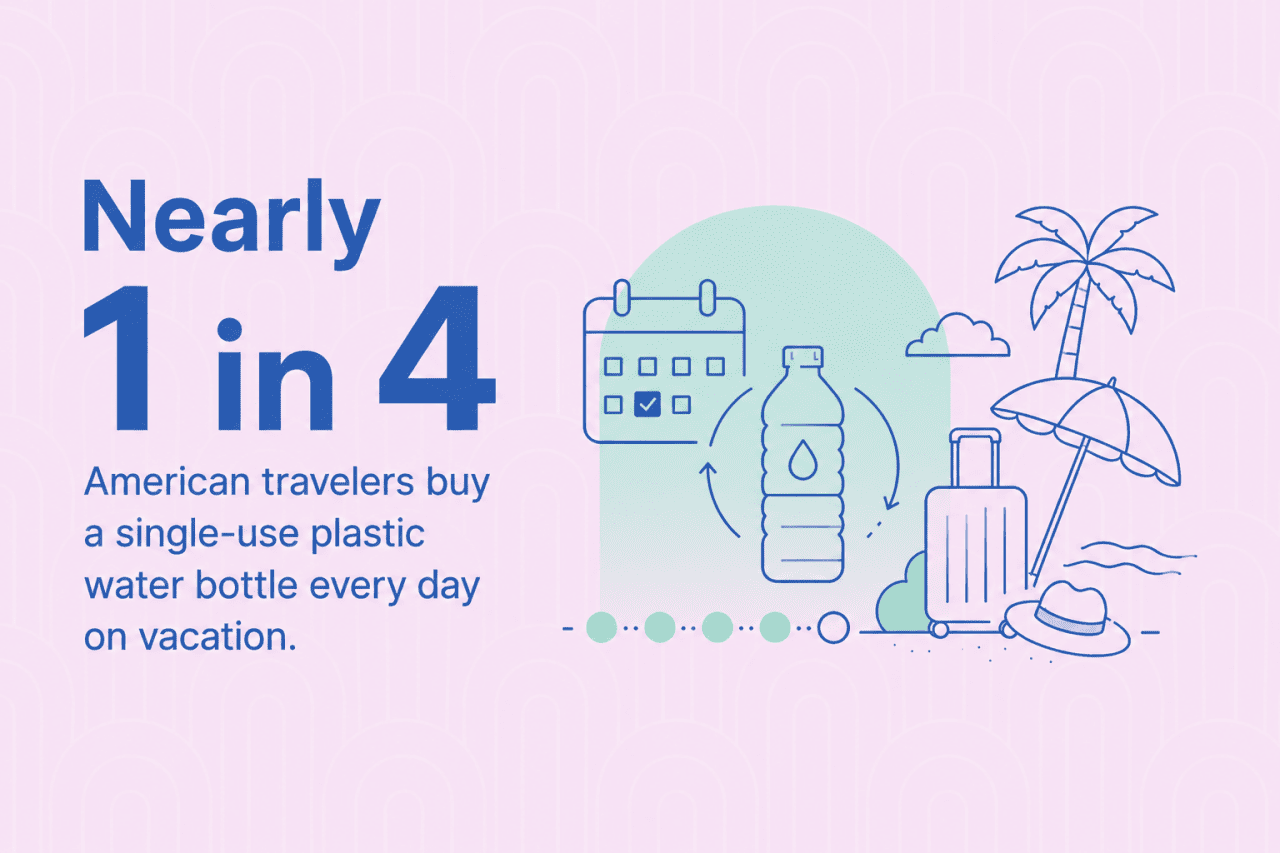
The reusable water bottle was supposed to be the gateway habit, the cheap and easy switch that proved sustainability could scale. On vacation, it’s losing. Nearly a quarter of respondents buy a single-use plastic water bottle every day they’re on the road. Another 42.5% buy them a few times per trip. Combined, that’s 67.2% of respondents reaching for a disposable bottle on most trips.
The scale becomes visible the moment you zoom out. Before Los Angeles International Airport banned single-use plastic water bottle sales in June 2023, LAX was selling more than 24,000 plastic water bottles every day, over 9 million in 2019 alone, according to an EcoWatch report. One airport, one product.
SFO became the first major U.S. airport to ban them in 2019, with the policy later expanding to other beverages. The infrastructure is changing in pockets. Traveler behavior is changing more slowly than the policy is.
Parents Are the Group Convenience Hits Hardest
SmartLifeCo
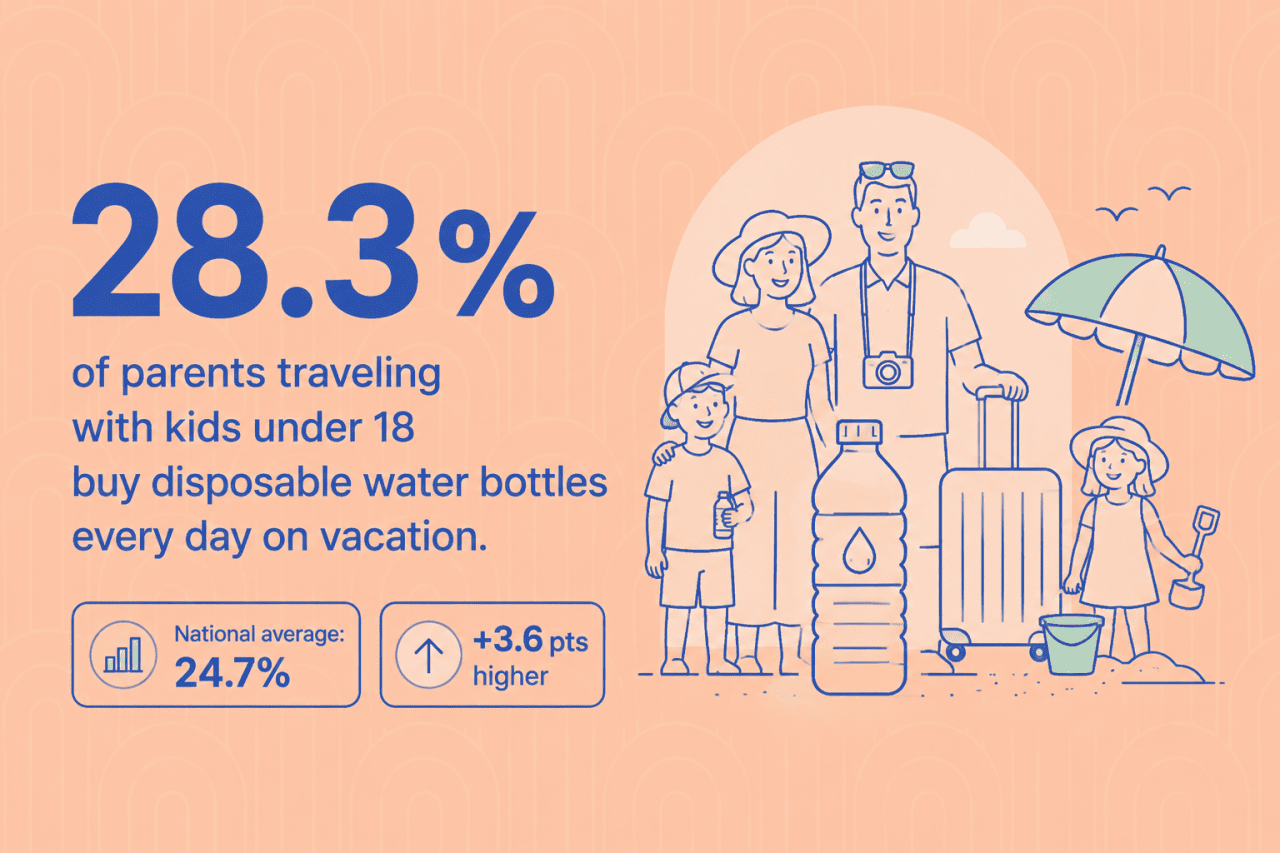
Fewer than 3 in 10 (28.3%) parents traveling with children under 18 buy disposable water bottles daily, nearly 4 points above the national average of 24.7%. One in 6 (16.7%) say they generate dramatically more plastic on vacation than at home, more than 5 points above the overall rate. Caregiving load and convenience pressure scale together. The reusable bottle is easy to commit to until someone smaller than the bottle is asking for a snack at the gate.
That’s a familiar tension to anyone who has tried to keep a family on the road and on a schedule. It’s also a market opportunity that the industry has been slow to take seriously. Family-focused hotels and airports built around making the sustainable option the easy one would land directly on the cohort generating the most excess waste.
Gen Z Feels the Worst and Slips the Fastest
SmartLifeCo
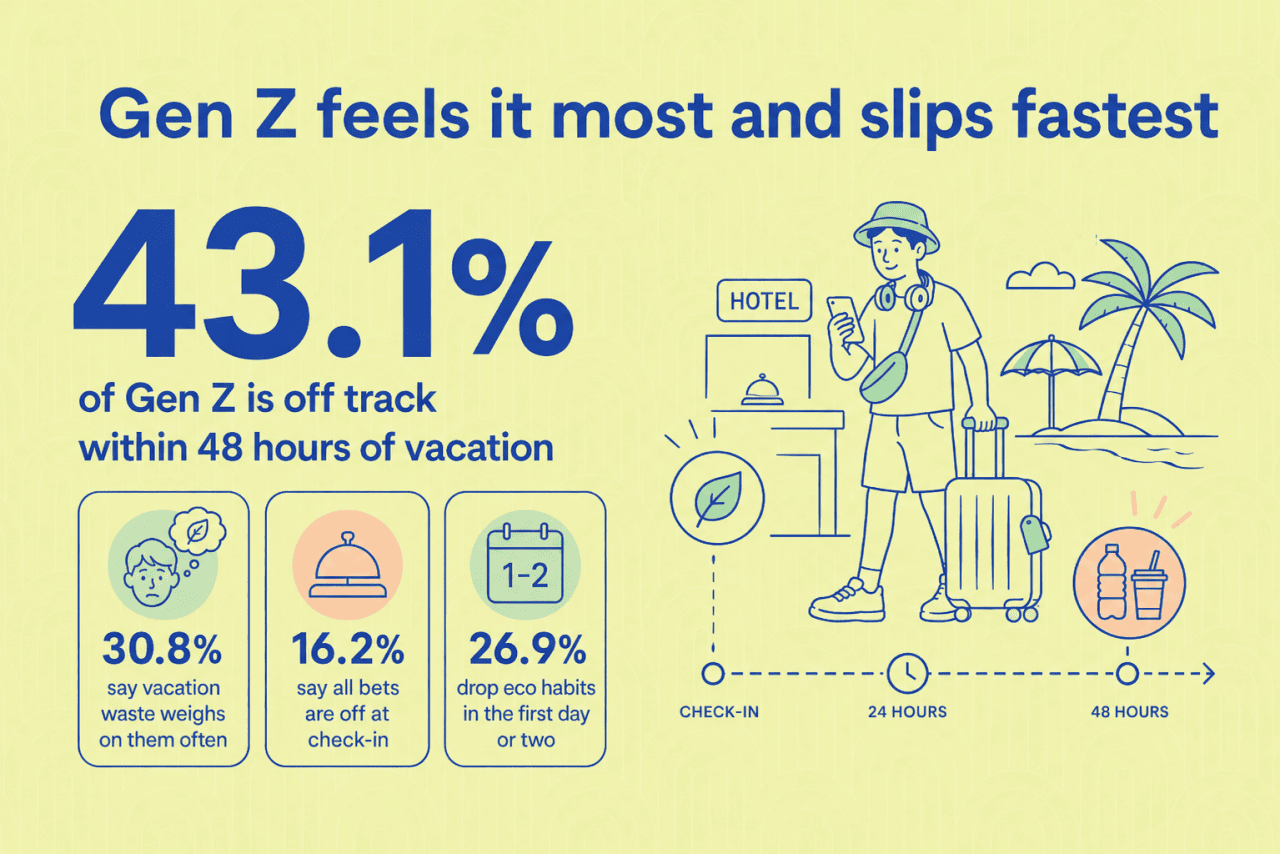
If one demographic carries the contradiction at its sharpest, it’s Gen Z. They are, by their own admission, the generation most bothered by vacation waste. Nearly a third (30.8%) say it weighs on them often. They’re also the fastest to slip. About 1 in 6 (16.2%) say “all bets are off” the moment they check in, and another 26.9% abandon their habits within the first day or two. That’s 43.1% off the wagon within 48 hours.
Gen Z is also the most likely generation to buy a plastic water bottle daily on the road (30.8%), the most likely to support surcharges on single-use plastics (66.1%), and the most likely to come home feeling relieved to be back to their greener routines (37.7%). They’re a generation that believes the system is broken, doubts they can beat it on their own, and is willing to back policies that change it.
Hotel Toiletries Are Where Most Travelers Cave
SmartLifeCo
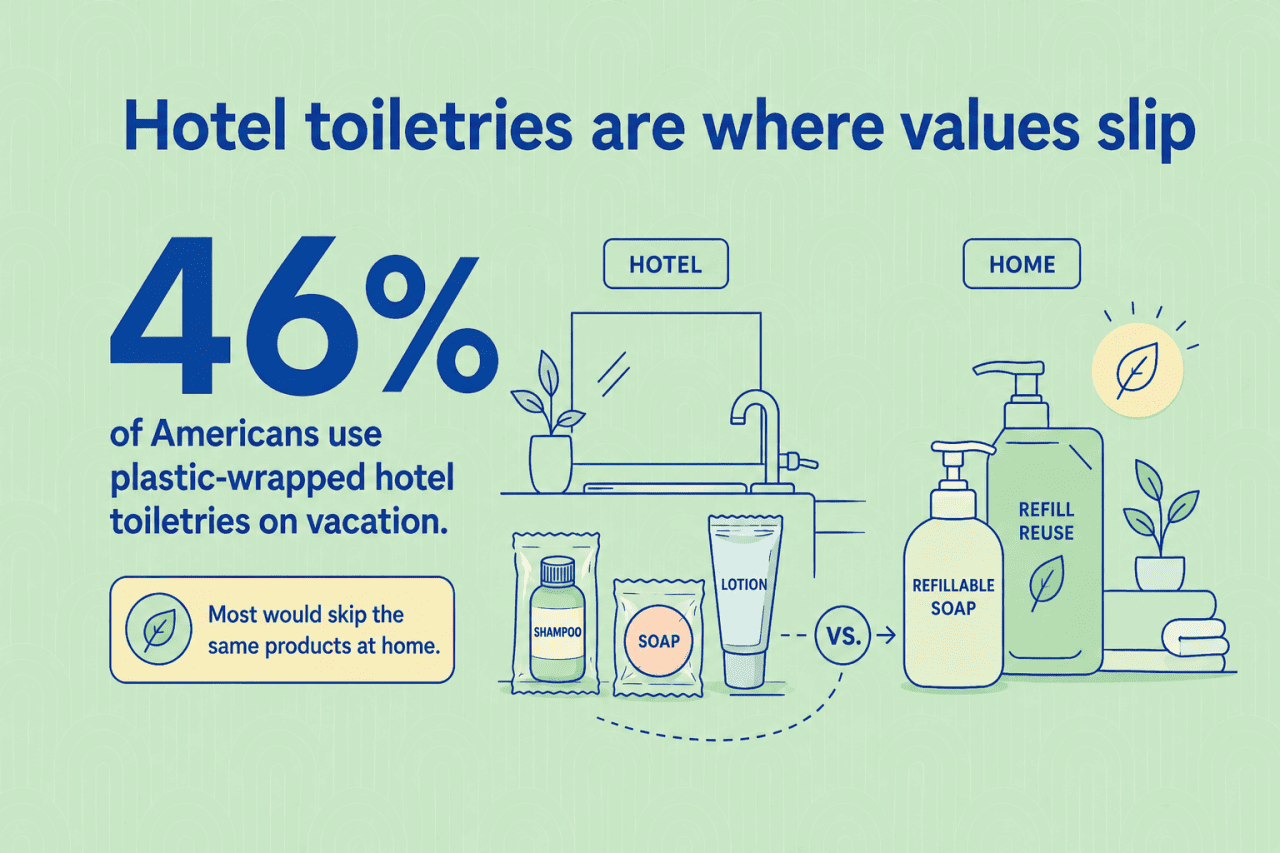
Ask a traveler where their values fall apart on vacation, and the answer is often the same: plastic-wrapped hotel toiletries. Nearly half (46%) of respondents reach for them on trips, even though most wouldn’t touch the same products at home. Among Millennials, that number climbs to 48.8%. The same pattern shows up in smaller items travelers don’t think twice about (disposable floss picks, single-use razors, mini toothpaste tubes), products designed for one trip and a landfill.
The industry has been moving. According to reporting by The Washington Times, New York’s ban on single-use hotel toiletries under 12 ounces took effect Jan. 1, 2025, for hotels with more than 50 rooms, following California’s existing law, with Washington’s set to take effect in 2027. Marriott completed its switch by the end of 2023, with 95% of its properties on pump bottles, a transition the company estimates prevents around 500 million small bath bottles from going to landfills each year. Hilton completed its toiletry transition the same year.
The travelers who feel guilty about those tiny bottles are, in increasing numbers, no longer being given the choice. The shift is also showing up in smaller product categories. Brands are reformulating travel-friendly oral care staples like eco-friendly floss picks to remove the trade-off between convenience and waste, the exact friction the survey identifies as the main barrier.
That’s the model travelers say they want. At least 2 in 5 (43.8%) say making sustainable options the default rather than the opt-in would do more to change their behavior than anything else. Among Gen Z, it’s 50.8%. In practice, “default” looks like the things travelers don’t have to think about: no plastic straw unless requested, no daily towel change unless the card is left out, no minibar plastics when a refill station is on the floor, no plastic water bottle when the hotel hands out a reusable at check-in. The most-cited fix is also the one that asks the least of the traveler.
The Waste Has to Go Somewhere
SmartLifeCo
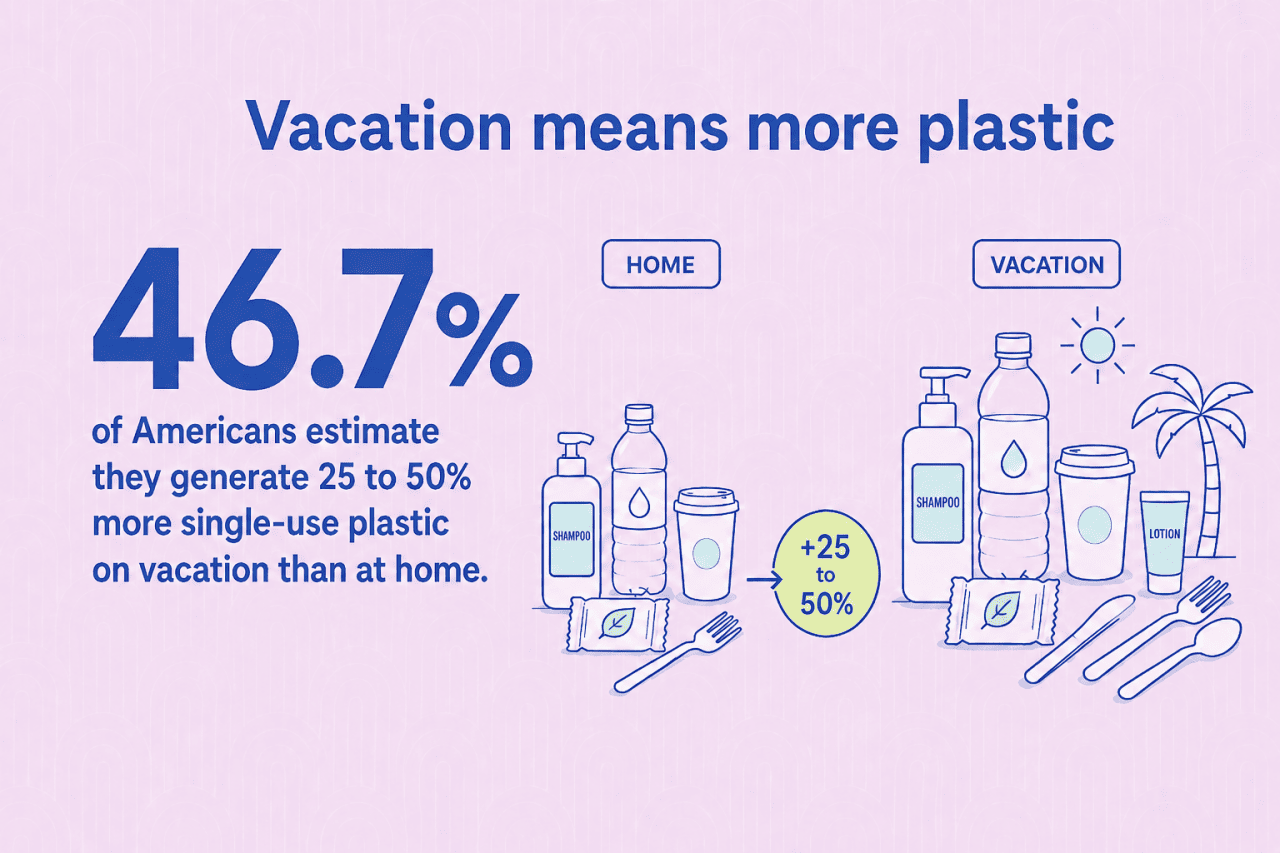
The data on vacation waste reads like an abstraction until you see where it ends up. Nearly half (46.7%) of respondents estimate they generate 25%-50% more single-use plastic on vacation than at home. Another 11.3% say they generate dramatically more, double or triple their normal amount. Among postgraduate respondents, that figure climbs to 19%.
That plastic has to land somewhere. Cruise tourism, the fastest-growing segment of the travel industry, is also where the vacation guilt gap is most visible: A typical large cruise ship carrying 3,000 passengers generates 8 tons of solid waste in a single week, with passengers producing up to 7.7 pounds of waste per day. Cruise ships make up roughly 1% of the world’s fleet but account for about 24% of all waste generated by ships. National parks have spent years sounding the alarm about overflowing trash and overstretched maintenance crews. The waste is invisible to the traveler generating it. It is very visible to the people who live where the trip ends.
Travelers Want the Industry to Make the Choice for Them
SmartLifeCo
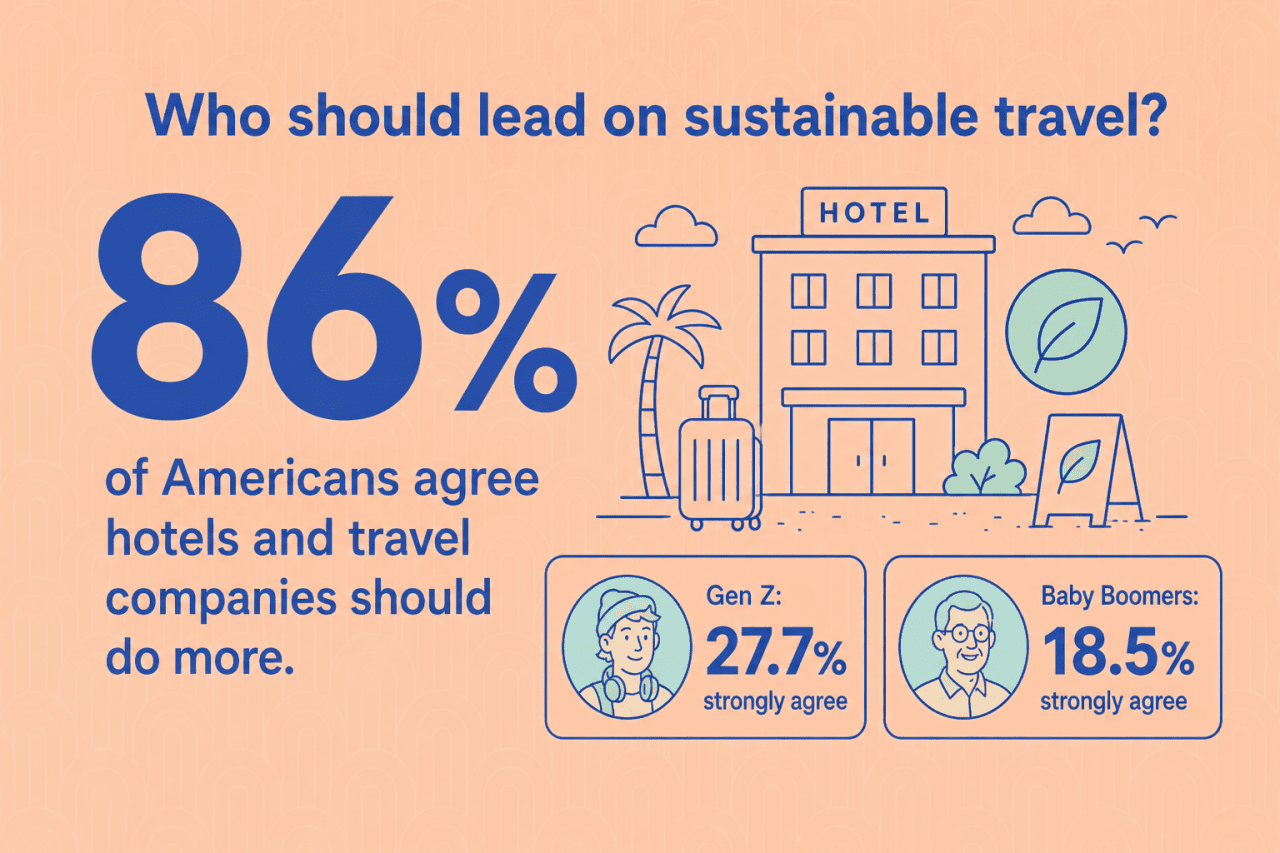
Asked who should lead on sustainable travel, 86% of respondents agree that hotels and travel companies should do more. Among Gen Z, 27.7% strongly agree, the highest of any generation. Among Baby Boomers, only 18.5%. The generational divide here isn’t about whether sustainability matters. It’s about who’s expected to fix it.
The most telling number: 40% of travelers say their most common rationalization is “I’d be more sustainable if hotels and airports made it easier.” Among postgraduates, it’s 49.5%. Among the highest earners, 48.6%. The most environmentally aware travelers are also the most likely to hand off the responsibility.
The policy travelers most often back also carries the sharpest equity problem. More than half (55.5%) support surcharges on single-use items at hotels and airports, but 45.4% of travelers earning under $25,000 oppose them. The fastest fix would land hardest on the travelers with the least flexibility.
Coming Home as a Quiet Form of Relief
SmartLifeCo
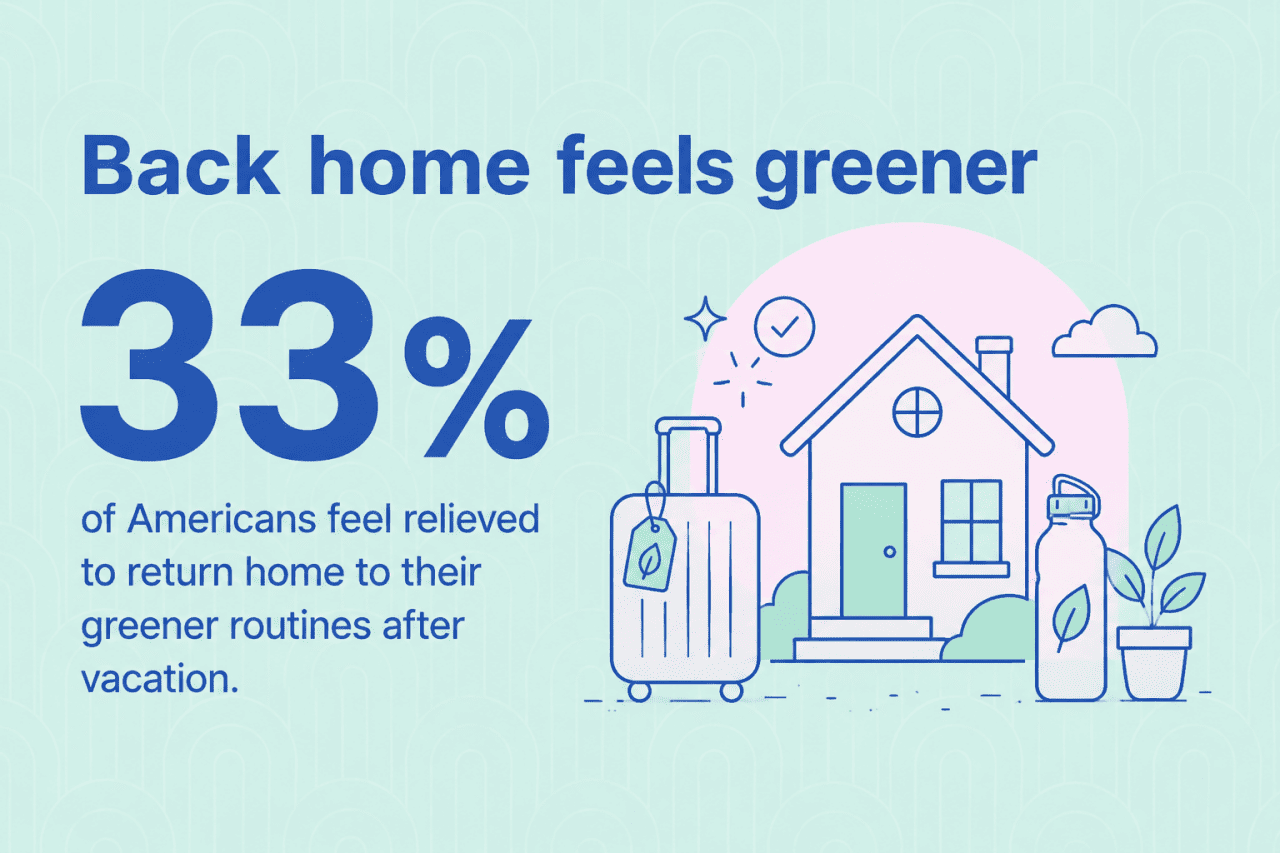
The most revealing finding in the survey may be this: 33% of respondents say they feel relieved to return home to their greener routines after a vacation. Gen Z leads at 37.7%. Among travelers earning under $25,000, it’s 35%. These are people whose sense of themselves as eco-conscious gets disrupted for a week, and who feel something like relief when they can be that person again.
Emotion alone doesn’t move behavior, though. Asked how they’d respond to learning more about tourism’s environmental impact, just 25.3% said it would be a wake-up call, prompting real change. Another 30% said they’d feel guilty and probably change nothing. The argument the data keeps returning to is that awareness is high, motivation exists, but the friction of acting on it alone is still too high for most travelers to clear without help from the industry.
The Vacation Guilt Gap isn’t a story about bad people. It’s a story about the limits of personal virtue inside a system built for convenience. Americans aren’t lying when they say they care about the planet. Most of them really do. They’re telling the truth about something harder: Caring, on its own, doesn’t survive a layover or a kid asking for a snack in plastic packaging.
The data points in one direction. Travelers want the industry to do the heavy lifting. They want sustainability built into the trip rather than being asked of them at every turn. The places already doing it, from airports without plastic bottles to hotels without tiny shampoos to states writing new rules, are showing what the next decade of travel could look like. The trajectory is becoming readable: regulatory pressure ahead of voluntary change, default-design replacing opt-in choice, and surcharges likely as the next policy frontier after toiletry bans. Whether the rest of the industry meets travelers where they already are is the open question.
Methodology
To understand how Americans approach sustainability while traveling, SmartLifeCo surveyed 1,000 U.S. adults who travel at least occasionally. Participants answered a series of questions about their eco-conscious habits at home, how those habits change on vacation, the single-use items they reach for on trips, and their views on industry responsibility for sustainable travel. Responses were analyzed by age, gender, household income, education level, and parental status to identify trends and generational disparities. The survey was conducted via Pollfish in May 2026.
This story was produced by SmartLifeCo and reviewed and distributed by Stacker.

