
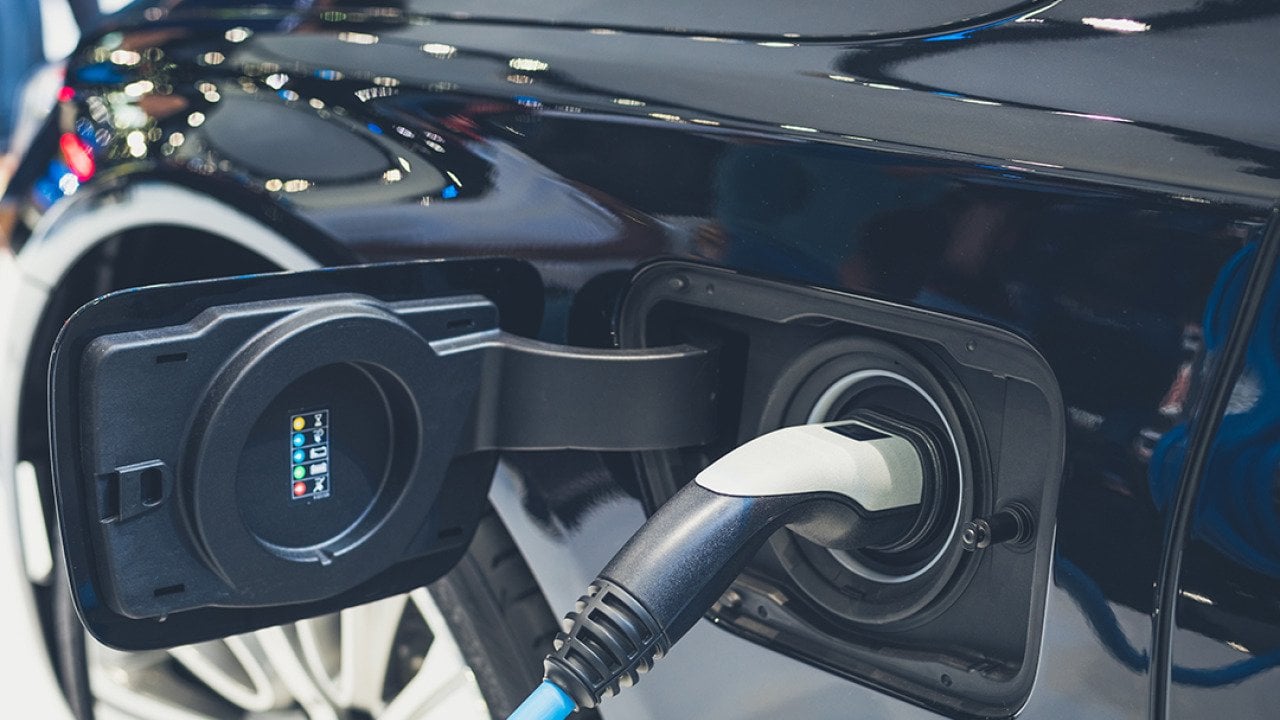
Noppadol Kostsu // Shutterstock
Are electric cars worth it? EV myths, debunked
Drivers today are energized about electric vehicles (EVs) and making the switch. There are an estimated 116 million EVs on the road today worldwide, and the number is expected to rise 30% in 2026.[1] That’s hardly a surprise at a time when gasoline is averaging over $4 per gallon.
But that begs an important question: Is buying and owning an electric car actually worth it? Truth is, the answer will depend on your driving habits, budget, location, charging access and other factors. Upfront costs, fuel savings, expected maintenance, charging convenience and the likelihood of long-term ownership need to be considered carefully.
To help you make a more informed decision about whether or not to get an EV, TheZebra addressed several misconceptions about electric vehicles while also providing facts about their pros, cons and costs.
Myth #1: Electric Cars Are Too Expensive
When electric cars first came onto the market in the late 2000s, they were seen as a luxury — especially due to their high price tag. But there are exciting shifts taking place in the electric car market that could lead to more affordable options.
Fact: The price gap between new EVs and new gasoline-powered vehicles is shrinking, now down to $6,500 — a gap offset by energy dollars saved (more on this next) and the likelihood that you’ll likely only spend between $100 and $200 annually in scheduled maintenance for an EV compared to $350 to $700 a year for a gas vehicle.
“Yes, the upfront purchase price can be higher than a comparable gas model. But operating costs can be materially lower, and the Department of Energy notes that new models are becoming more competitively priced,” says Dennis Shirshikov, a professor of finance and economics at City University of New York/Queens College.
Unfortunately, the $7,500 point-of-sale tax credit of the 2022 Inflation Reduction Act has been phased out on a federal level for new vehicle purchases as of late 2025 — replaced by the 2026 One Big Beautiful Bill, which enacted stricter eligibility requirements. Now, instead of a one-time tax credit, eligible buyers of any new car (not just an EV) can claim an annual tax deduction of up to $10,000 for the interest paid on their car loans if the vehicle underwent final assembly in the United States, is under 14,000 pounds and is for personal use.
In addition, many states like Colorado, Connecticut, Delaware and Maryland offer valuable tax rebates to help you purchase and maintain an electric vehicle. So make sure to double-check which incentives are available in your state before purchasing your next car.
Myth #2: I Won’t Save Money Since My Electric Bill Will Go Up
Fact: Electricity is cheaper and less volatile than gas, so the savings on fuel will more than cover it.
Your electric bill is indeed likely to go up if you plan to charge your vehicle at home. But that increase doesn’t automatically mean your total driving costs will rise. In many cases, the extra electricity costs are still lower than what you would’ve spent on gasoline. Your total savings will depend on where you live, how much you drive and whether you charge mostly at home or rely on public fast chargers.
“The biggest variable here is where you choose to charge your car,” says Luke Oswald, automotive specialist for Wheels Away. “Yes, your overall home energy bill will go up if you charge at home. But you’ll still be paying much less than if you were to charge in public charging options. Remember, too, that gas is more expensive in some states while electricity bills are greater in others. But, on average, based on data over the last few years, an EV should cost around 3 to 4 cents per mile if you only charge at home versus 10 to 15 cents per mile for a gasoline-powered car.”
Fact: Gas prices are higher and more volatile than electricity.
Consider that the average motorist now drives about 14,000 miles per year. With a standard gas car averaging 27 miles to the gallon and gas prices at roughly $4 a gallon, your annual fuel cost sits at $2,074. Now, compare that to an efficient electric vehicle that gets 4 miles per kilowatt-hour. At the current average electricity rate of 18.5 cents per kWh, you’re paying roughly 4.6 cents per mile. For those same 14,000 miles, your annual electricity cost would be just $648. That’s a total yearly savings of $1,426, proving that — even with rising utility rates — EVs remain the more economical choice for your daily drive.
Myth #3: Electric Cars Don’t Have Enough Range
One of the biggest EV concerns is the range of the vehicle. This has contributed to a myth that electric cars don’t offer enough mileage per charge, even for daily commuting.
Fact: The average electric vehicle has a range of over 300 miles.
Fact: Electric cars offer enough range for the average daily commuter. The average American commutes about 41 miles per day, and a full charge on an all-electric vehicle offers well over that.
“Also, consider that over 98% of on-road passenger trips are under 75 miles, which a typical EV can more than handle on a full charge,” Shirshikov adds. “Range anxiety is still real for some buyers, but daily-use reality is usually much less dramatic than the fear.”
Myth #4: Charging Stations Aren’t Readily Available
While it’s true that electric cars require access to a charging station, a common misconception is that charging stations are not readily available for the average American.
Fact: There are more than 78,000 charging stations across the nation available for public consumption — and the number continues to grow.
“The number of public charging stations has more than doubled in the past 10 years. And with more to be built, charging stations should soon be just as common, if not more, than a typical gas station,” says Oswald.
Fact: Most EVs can be charged with a standard 120 Volt (Level 1) outlet at home. At-home fast-charging stations may require the help of an electrician since they require a dedicated 240 Volt (Level 2) outlet.
Myth #5: Electric Cars Have a Bigger Carbon Footprint
You may have heard that electric cars aren’t good for the environment since the electricity that charges them creates power plant emissions, outweighing the CO2 emissions caused by gas cars.
Fact: Electric vehicles typically have a smaller carbon footprint than gasoline cars, even when accounting for the electricity used for charging.
Researchers demonstrated that a 2025 model-year EV creates 46% fewer greenhouse gas emissions than a comparable gasoline vehicle.
This disparity is expected to grow to 76% by 2035 as the electricity grid continues to decarbonize. And 2025 research by the International Council on Clean Transportation shows that, although EVs produce about 40% more emissions in the manufacturing process than gas cars, this extra carbon is offset after only 10,500 miles (within the first year or two of ownership).
“EVs produce meaningfully lower lifecycle emissions than gas vehicles in nearly every U.S. region, even accounting for manufacturing. Also consider that electricity grids are getting cleaner every year,” says Zander Cook, co-founder and CRO of Lease End.
Myth #6: The Grid Can’t Handle Too Many New EVs
You may have heard rumors that the power grid will not be able to handle hundreds of thousands of cars being charged all at once. However, when taking into account when people charge their electric vehicles (typically at night), there is little need for concern.
Fact: Most electric vehicles get charged at night during off-peak hours when power demand tends to be the lowest.
“Yes, if we all switch to electric cars tomorrow, the grid would struggle to cope with the overnight change. But that’s not what’s happening,” says Oswald. “The grid will be built up to cope with the growing use of EVs in the years ahead.”
Myth #7: Electric Cars Are Not as Safe
Gas-powered cars go through extensive safety testing before heading to market. Some skeptics are under the impression that electric cars are not well-tested for safety before hitting the market. This impression stems from the uncertainty behind an electric car’s battery and the risk of electrocution if the car is involved in an accident.
Fact: All light-duty cars and trucks sold in the United States must meet the Federal Motor Vehicle Safety Standards and, therefore, must undergo an extensive testing process on everything from controls and displays to the flammability of interior materials. All vehicles must pass every extensive test regardless of whether the vehicle operates on gasoline or electricity.
“An EV does not get a lower bar just because it has a battery. Buyers should judge safety model by model, not assuming the powertrain itself makes the vehicle unsafe,” suggests Shirshikov.
Still, some are concerned about the fire hazard that a lithium-ion battery poses to an EV in the event of a collision. Per recent National Transportation Safety Board and Bureau of Transportation Statistics data, all-electric vehicles encounter only roughly 25 fires per 100,000 sold versus 1,530 fires per gasoline-powered vehicles sold.
Insuring an Electric Car
You might also wonder what the insurance looks like on an electric car. Indeed, new cars are typically more expensive to insure. But what about insuring a new electric car?
When it comes to electric vehicle insurance, it will ultimately depend on the make and model. For example, a luxury car like a Tesla will be more costly to insure than a Nissan Leaf.
On average, it costs more to annually insure an EV ($2,280) than a gasoline vehicle ($1,529) or a hybrid vehicle ($1,637).
Is It Really Worth Buying an Electric Car?
Even after clearing up these common misconceptions about electric cars, you may still wonder: “Are electric cars worth it?”
“Buying an EV today is neither a brilliant move for everyone nor a terrible move for everyone. An EV is worth it when your daily miles, charging access, local power rates and ownership horizon line up,” Shirshikov recommends.
Per Cook, the best candidates for purchasing an EV are drivers who own their own home, have a predictable daily commute under 60 miles, and live in an area with reasonable charging infrastructure.
“That profile allows you to maximize the cost advantages of home charging while minimizing range anxiety,” he says. “Drivers who frequently take long road trips, live in apartments without charging access, or need towing capacity are still better served by hybrids or gas vehicles, at least for now.”
For Oswald, buying an EV makes the most sense if you live in a city or a largely urban area.
“Start-stop driving is not good for traditional internal combustion engines in the long run, whereas your EV is pretty much made for it. And you’re likely to be much closer to charging infrastructure in a built-up area than someone who lives more rurally,” he notes.
This story was produced by TheZebra and reviewed and distributed by Stacker.

